

When you pick an audiobook, it’s about more than just the story. The way the audiobook is made, especially who reads it, can really change how you feel about the tale. For fans of amazing fantasy worlds, understanding these choices is key to a perfect listening time.

Think about it this way: some audiobooks have just one person reading the whole story. This is like listening to a friend tell you a book from start to finish. Other audiobooks are called full cast audiobooks. These are special because many different voice actors bring the story to life. Each character might have their own actor, making it feel more like a play. As one source explains, a full cast audiobook has the book’s words acted out by many people, not just one narrator What’s the Difference: Audio Dramas and Full Cast Audiobooks.

This matters a lot for fantasy books. Fantasy stories often have many characters, strange creatures, and big, complicated worlds. When you listen to full cast audiobooks, each voice helps you keep track of who is talking. It makes the world feel more real. Imagine listening to a story like the hobbit book with many different voices for Gandalf, Bilbo, and all the dwarves. It’s truly an amazing way to dive into the adventure.
This guide will help you pick the best way to listen to your favorite fantasy stories. We will look at why different types of narration are important and how to choose what’s right for you. If you love discovering new stories, check out some of the 10 best fantasy fiction books of all time that defined the genre.

By 2026, many audiobooks are made with great care, so finding your next perfect listen is easier than ever.
Audiobook Formats Explained: Full Cast, Single Narrator, and Audio Drama
Choosing your next audiobook means thinking about how it’s brought to life. There are a few main ways stories are told through sound.
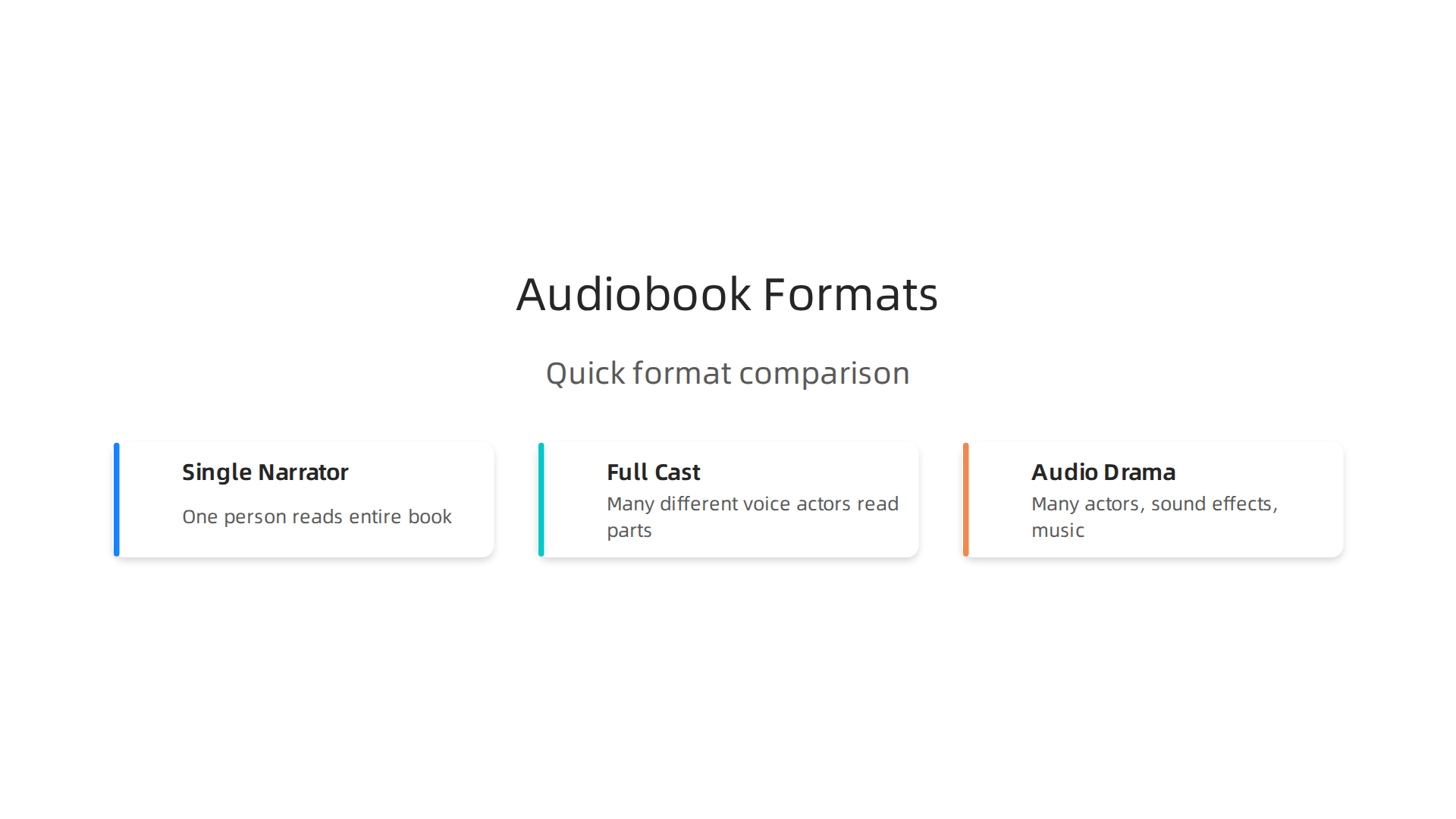
Each way offers a different kind of experience, especially for big fantasy worlds. Knowing these differences helps you pick the perfect one.
First, let’s talk about the single narrator audiobook. This is the most common kind. One person reads the entire book, doing all the voices for different characters. It’s like having one skilled storyteller guide you through the whole journey. This format can make the story feel very personal and helps you focus on the words. Many listeners love the consistent voice and style of a single narrator, especially if the narrator is someone like Julia Whelan, who is known for her amazing work. This style is great for stories where the inner thoughts of one character are very important, or for simpler tales where you don’t need many different voices to follow along.
Then there are full cast audiobooks. As we mentioned, these are special because many different voice actors read the parts of different characters. It’s often called a "multicast" or "dramatized" audiobook. Each character has their own voice, making it much easier to tell who is speaking. This helps a lot in fantasy books with many characters and complex plots. It feels less like someone reading to you and more like you’re listening to a play. Full cast audiobooks can really pull you into the story, making it feel more real and alive. Some say that choosing between a single narrator and a full cast depends on the story itself and what the listener likes best The Pros and Cons of Full Cast Audiobooks vs Single Narrator.
For epic fantasy stories or long Stephen King audiobooks with lots of characters, a full cast can make the listening experience much richer.
Finally, we have audio dramas. These take things a step further than full cast audiobooks. An audio drama is like a movie for your ears. It uses many voice actors, just like a full cast audiobook, but it also adds lots of sound effects and music. This means you might hear the sound of footsteps, a sword clashing, or a spooky melody that sets the mood. Audio dramas are less about reading the book word for word and more about acting it out as a performance. As one source notes, dramatized audiobooks with their full-cast recordings and sound production make for a more lively listening experience Standard vs Dramatised Audiobooks Choose Your Listening. If you want to feel like you’re right in the middle of the action, an audio drama might be your best choice.
Choosing between these formats depends on what you want from your listening time. For fantasy stories, full cast audiobooks can greatly improve how much you enjoy the story, especially with books like the hobbit book where there are many unique characters. If you want to learn more about a famous author known for epic tales, check out a guide on Stephen King Novels Ranked The Top 10 Books For Fantasy Readers.
Why full cast audiobooks work especially well for fantasy
After looking at the different ways audiobooks are made, it’s clear that full cast audiobooks hold a special place, especially for fantasy stories. These tales often have many characters and rich, detailed worlds. A full cast helps bring these complex elements to life in a way a single narrator might find challenging.
One big reason is how clear distinct voices make the story. In fantasy books, you might meet dozens of characters, each with a unique name, background, and role. Imagine listening to a book like The Lord of the Rings or a similar epic. If one person tried to do all the voices, it could get confusing quickly. With full cast audiobooks, each character has their own voice actor. This makes it much easier to tell who is speaking at any moment. It helps you keep track of all the different heroes, villains, and creatures that fill these magical worlds.

This approach makes the experience feel more like a movie for your ears, helping listeners get truly lost in the story Full Cast Audiobooks.
Beyond just identifying characters, an ensemble of narrators also helps build the world itself. Voice actors can bring out the different ways people speak in a fantasy setting, like a grumpy dwarf, a wise elf, or a powerful wizard. This adds depth to the cultures and places in the story. When characters talk to each other, the varied voices make the scenes feel more real, almost like you’re right there listening to them. Even without sound effects, the dialogue becomes a performance.
Fantasy series often have long timelines and many different story threads happening at once. A full cast can handle these complex plots better by making sure each character’s voice is consistent throughout. This keeps the listener from getting confused about who is who, even if a character hasn’t appeared for a while. It also helps manage stories that jump between many different points of view.
However, making full cast audiobooks comes with its own set of challenges. Producing them costs more money because you need many actors, directors, and more time in the studio. This can also mean they are not as widely available as single-narrator books, as not every book gets the full cast treatment. The production process needs careful planning, from choosing the right voices to editing all the performances together. You can learn more about the steps involved in making audiobooks in guides like The Complete Guide to Audiobook Production & Budgeting. Despite these trade-offs, for fans of epic fantasy who want to fully immerse themselves in a story, the rich experience of a full cast audiobook is often well worth it. If you’re looking for more great stories to dive into, consider exploring some of the 10 best fantasy fiction books of all time that defined the genre.
Making full cast audiobooks is a bit like making a play or a movie, but just with sound. It takes many steps and talented people to bring a story to life through different voices.
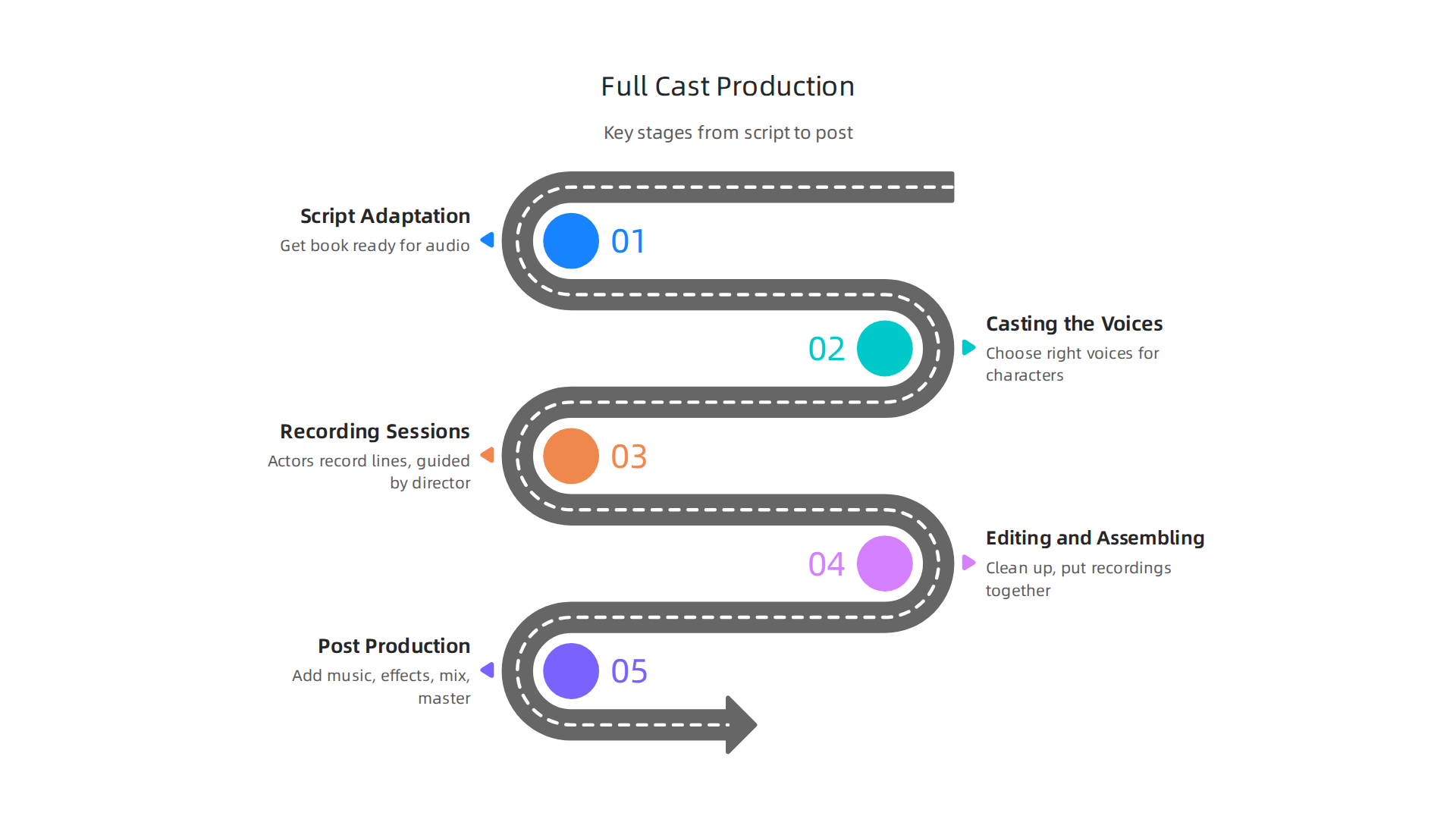

Even though it can cost more, the careful work behind the scenes makes these audiobooks so special.
Script Adaptation and Planning
First, someone has to get the book ready for audio. This means going through the written story and making a special script for the voice actors. The producer often leads this part. They decide if the audiobook will be the full book (unabridged) or a shorter version (abridged). For very long books, like The Hobbit book, this decision can really change the project. The script is broken down so each actor knows their lines and when to speak.
Casting the Voices
Next comes choosing the right voices. This is super important for full cast audiobooks because each main character needs their own actor. The director works to find actors whose voices fit the characters perfectly. They might look for someone with a strong, deep voice for a hero, or a high, soft voice for a child. Imagine trying to cast a book by Stephen King; you’d need actors who can really bring out the different emotions and dangers in his stories. It’s about making sure each voice sounds distinct and helps you picture the person speaking. Sometimes, a well-known voice, like that of Julia Whelan, can really draw listeners in, even for single-narrator books.
Recording Sessions
Once the actors are chosen, they head to the studio. Each voice actor records their lines, often alone in a sound-proof room, but with the director guiding them. The director helps them say their lines with the right feeling, speed, and tone. For full cast audiobooks, even if actors record separately, they are often performing as if they are talking to each other, guided by the director to make the conversations sound natural and lively. This process focuses on getting very clear recordings of each voice performance What High-End Audiobook Production Really Involves.
Editing and Assembling
After all the voices are recorded, the sound engineer takes over. This is where the magic really happens. They carefully edit the audio, cleaning up any mistakes, noises, or awkward pauses. Then, they put all the different voice recordings together, line by line, scene by scene. It’s like putting together a giant puzzle, making sure all the pieces fit perfectly and the story flows smoothly. If you’re curious, you can often find videos that show parts of The Audiobook Production Process.
Post-Production: Sound Mixing and Mastering
The final steps involve adding extra layers to make the audiobook truly immersive. This is called post-production. Sound engineers might add music at the beginning and end, or special sound effects to make a scene more exciting. Think of the rustle of leaves in a forest or the clang of swords in a battle. They also make sure all the sound levels are just right, so the voices, music, and effects blend together perfectly and are easy to hear. This full workflow ensures the final product is polished and engaging Audio post‑production workflow guide (2026). The choices made during these stages, like adding music or choosing between an abridged or unabridged version, all affect how much the audiobook costs to make and how much listeners will enjoy it.
If you love diving into great stories, knowing how these audio experiences are made can make you appreciate them even more. You can explore guides to help you find and organize your favorite stories, like learning How to Find and Organize Fantasy Books on Google Play Books.
After learning about all the work that goes into making a fantastic audiobook, you might be eager to find some high-quality full cast audiobooks to enjoy. Luckily, it’s easier than ever to find these special productions if you know where to look and what to search for.
Where to Find Them
Most big audiobook platforms offer a wide selection. Places like Audible, Spotify, and Google Play Books are great starting points. These services have many different types of audiobooks, including ones with multiple voices. New ways to choose your audiobooks are even popping up in 2026, so there are always new platforms to explore How to Choose the Right Audiobook Strategy in 2026.
When you’re searching, look for filters or categories like "full cast," "ensemble cast," "multi-voice," or "dramatized." These labels are usually good signs that you’re looking at a production with many actors. Some platforms might even have special sections for these types of audiobooks, making it simple to browse. For example, if you’re a fantasy fan looking for an immersive experience with "the Hobbit book," typing "full cast" next to the title can help you find it. You can even find guides that help you discover great titles, like a list of Top Full Cast Audiobooks for Immersive Listening.
What to Look for in Descriptions
Once you find a potential full cast audiobook, it’s smart to check the details. The "metadata" of an audiobook, which is all the information about it, helps you discover what you’re looking for Metadata for Audiobooks: Boost Discoverability. Look at the narrator or cast list. If you see many names listed as "performers" or "voice actors" instead of just one, that’s a strong clue.
Also, read the production notes or description. They will often proudly state if it’s a full cast production or mention how many actors were involved. Sometimes, it might even say "audio drama" which means it’s fully acted out, often with sound effects and music, just like a play for your ears. For popular authors like Stephen King, you might find specific "Stephen King audiobooks" that are full cast, bringing his thrilling worlds to life with a full team of voices. Even famous single narrators like Julia Whelan are known for bringing stories to life, but full cast productions add a different layer of depth with many distinct voices.
Smart Ways to Sample
Before you commit to listening to a whole book, use the sample feature. Most platforms let you listen to a few minutes for free. For full cast audiobooks, this is super important. Here’s what to listen for:
- Distinct Voices: Can you easily tell the characters apart by their voices?
- Production Quality: Does the sound feel professional? Is it clear and well-mixed?
- Acting: Do the actors bring emotion to their lines? Do the conversations sound natural?
Also, check the reviews from other listeners. They often mention if the narration is good or if the full cast did a great job. Many platforms also have good return policies if an audiobook doesn’t meet your expectations. These tips help you choose a high-quality listening experience and make sure your time is well spent.
If you enjoy a good story, you might also like to explore other genres. The Best Dystopian Books to Read in 2026 for Fantasy Fans can open up new worlds of imagination.
For a fun break from serious fantasy, consider a different kind of adventure.
Looking Beyond Fantasy? The Ridiculous offers imaginative worlds with a comic sci-fi twist.
Evaluating Narrators and Credits: What to Look for in Ensemble Casts
You’ve learned how to find and sample full cast audiobooks. Now, let’s look closer at how to pick the really great ones.

It’s not just about hearing many voices, but about how well they work together and the care put into the whole production. This means looking at the people behind the voices and what makes a high-quality team.
When you’re checking out a full cast audiobook, go beyond just the main voice actors. Look for other important names in the credits, like the audio director or producer. These people are like the conductor of an orchestra. They make sure all the different voices and sounds blend together perfectly to tell the story. A good director can make a big difference in how exciting and smooth the listening experience is. Knowing who directed and produced the audiobook can tell you a lot about its overall quality, just like a director for a movie.
The power of many voices working together is pretty amazing. Research suggests that hearing different voices can actually help keep your attention better, making the story more engaging Boosting Persuasion: The Attention Benefits of Multiple Narrating Voices. This is why full cast audiobooks can feel so alive.
Interpreting Narrator Reputations and Feedback
Even with many voices, some narrators might be more famous than others. For example, while someone like Julia Whelan is known for her amazing solo narration, in a full cast, you’ll see a list of actors. If you see names of actors you recognize from other audio dramas or voice work, that’s a good sign. It means experienced people are involved.
When reading reviews, pay special attention to what listeners say about the whole ensemble. Do they mention that the voices were distinct? Did the cast bring the characters to life? Was it easy to follow who was speaking? Sometimes, a really strong performance by one or two actors can make an audiobook shine, but with full cast audiobooks, you want the whole team to be excellent. People often highlight how certain Stephen King Novels Ranked: The Top 10 Books for Fantasy Readers get great full cast treatments that really make his stories pop.
Your Checklist for a Great Full Cast Experience
To make sure a full cast audiobook will be a good fit, use this quick checklist:
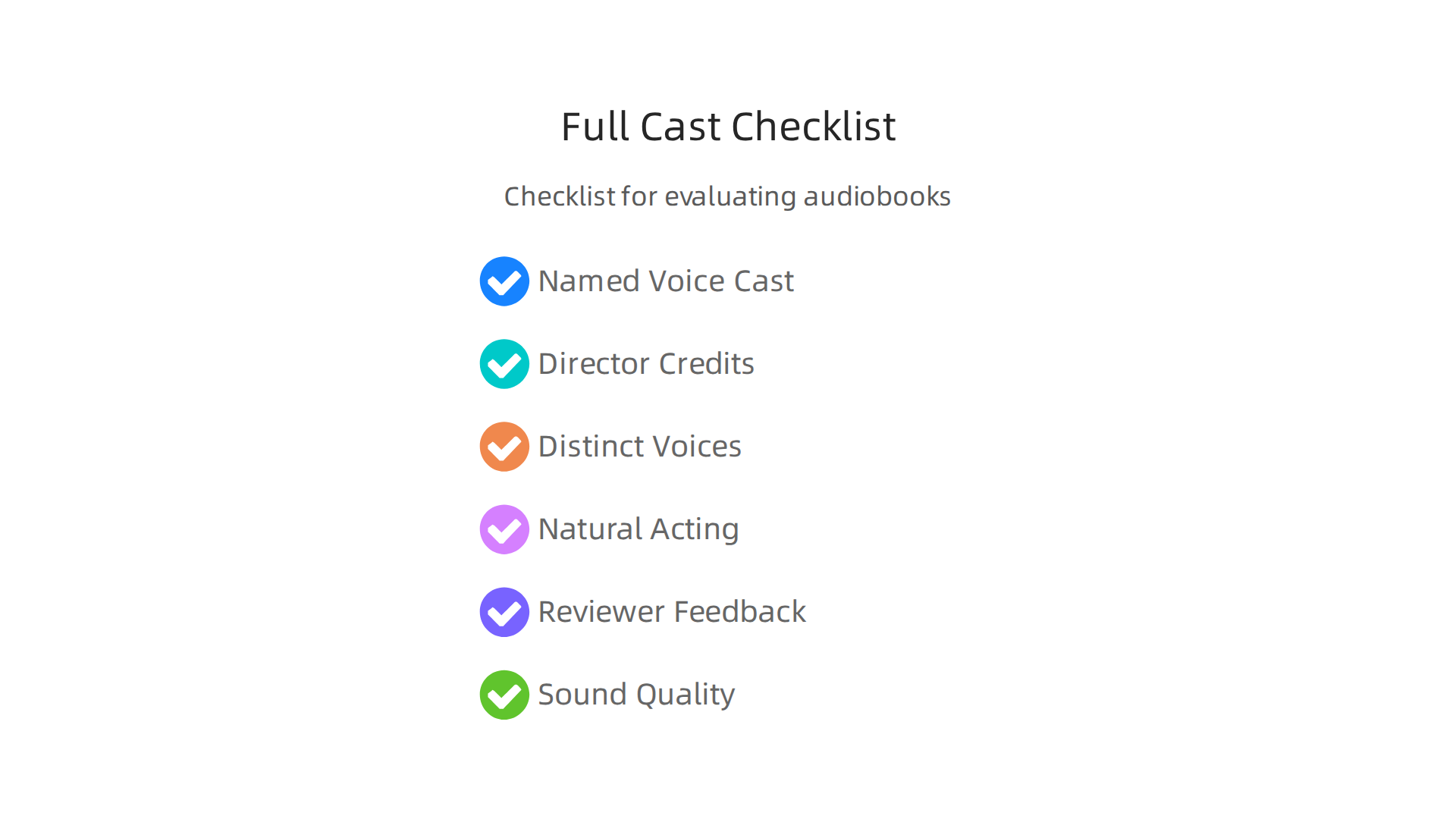
- Named Voice Cast: Are many actors listed by name, not just "various narrators"? This shows professional involvement.
- Director/Producer Credits: Can you find a director or producer listed? This often means the production was carefully guided.
- Distinct Voices in Sample: As you listen to the sample, can you easily tell each character apart? Do they sound different enough?
- Natural Acting: Do the conversations flow well? Does the acting sound real and full of feeling, not stiff?
- Reviewer Feedback: Do other listeners praise the full cast’s performance in their reviews? Look for comments on voice quality and character portrayal.
- Sound Quality: Does the audio sound crisp and clear? Are sound effects and music, if any, used well and not distracting?
By checking these things, you can choose full cast audiobooks that truly enhance your story experience, whether it’s an epic fantasy like "the Hobbit book" or a thrilling mystery. You’ll ensure the ensemble cast makes the story better, rather than just adding noise.
Choosing great full cast audiobooks means knowing what to look for, but it also helps to understand the different kinds of multi-voice productions out there. Sometimes, the names can be a bit confusing. Let’s clear up what "full cast," "dramatization," and "audio drama" really mean, so you know exactly what to expect when you press play.
Full Cast vs Dramatization vs Audio Drama: Terminology, Expectations, and Listener Etiquette
Even if an audiobook has more than one voice, it might not be a "full cast" in the way you think. It’s helpful to know the differences between these types of audio stories.
Full Cast Audiobooks
This is what we’ve been focusing on. A full cast audiobook usually has several voice actors, with each one playing a different character. Think of it like a play where different people speak the parts. There’s often still a main narrator who tells the "story parts" or describes what’s happening. The other actors jump in for dialogue. It makes the conversations feel very real. This style works well for many stories, making them more alive than a single narrator reading everything.
Dramatizations
A dramatization takes the "full cast" idea a step further. It’s still based on a book, but it adds more elements to make it feel like you’re truly in the story. This often includes sound effects (like doors creaking or rain falling) and background music. The main narrator might still be there, but their role could be smaller. Dramatizations are designed to be more like listening to a movie for your ears. They can really pull you into the world of a book, whether it’s an intense mystery or an epic fantasy.
Audio Dramas
An audio drama is often a complete show made just for listening, not always starting as a book. Imagine an old radio play. There’s usually no main narrator at all. It’s all dialogue from different actors, mixed with lots of sound effects and music. It creates a full world just through sound. For example, some stories are made directly as audio dramas and never even come out as regular books first. Research shows that combining different ways of getting information, like hearing and listening, can really help you understand and enjoy the story more deeply Does Modality Matter? The Effects of Reading, Listening, and Dual.
Why Labels Get Confused
Here’s the tricky part: sometimes, companies don’t use these terms perfectly. A "full cast" production might have some sound effects, or a "dramatization" might be called an "audio drama." It’s not always clear cut. This is why listening to samples and checking the credits is so important, as we talked about before. Don’t just rely on the label.
Setting Expectations for Long Series
When you start a long series, like a set of fantasy books, it’s extra important to know what you’re getting.
- Sample Strategy: Always listen to a sample from each book in the series, if possible. Don’t assume the first book’s style will be the same for all of them.
- Credit Scanning: Quickly check the credits for each book. Are the same main actors or directors listed? This can tell you if the quality will stay the same.
- Listening Notes: If you’re really into audiobooks, keeping simple notes on what you liked or didn’t like about a production can help you pick future listens.
For Book Clubs and Collectors
If you’re part of a book club, or you love collecting different versions of your favorite stories, talking about multi-voice productions adds a fun layer.
- Cataloging: When you list your audiobooks, it might be helpful to add a note about the production style (full cast, dramatized, etc.). This helps you remember what you liked.
- Discussion: In book clubs, discuss not just the story, but also how the different voices made you feel. Did the full cast help you understand the characters better? Did the sound effects in a dramatization add to the mood?
Understanding these differences helps you make smarter choices and enjoy the rich world of multi-voice audiobooks even more. If you’re a fantasy fan who enjoys stories with lots of humor and strange new places, you might enjoy taking a side trip to discover some truly funny novels. You can learn more about different kinds of stories, including ones that might be great for listening, by checking out the 10 best fantasy fiction books of all time that defined the genre.
A ridiculous series for fantasy fans who like wit and weird worlds: Add a Sci-Fi Comedy Detour.

Summary
This article explains how audiobook format — single narrator, full cast, or audio drama — changes the way you experience fantasy stories. It describes the strengths and trade-offs of each format, why full cast productions often suit complex fantasy worlds, and how dramatizations add music and effects for a cinematic feel. You’ll learn the main steps of full cast production, from script adaptation and casting to recording, editing, and post‑production, plus why these projects cost more and are less common. The guide also gives practical advice on where to search for ensemble productions, what to check in credits and metadata, and how to use samples and reviews to judge quality. By reading this, you’ll be able to pick the audiobook style that best fits a book’s scope and your listening preferences, especially for epic fantasy series.