
Introduction: Expanding Your Reading Horizons Beyond Fantasy
You know that feeling. You have just finished another epic fantasy series. The world was rich. The characters felt like old friends. And now you are staring at your bookshelf wondering what could possibly come next.

If you are a dedicated fantasy reader, you are not alone. According to the 2026 Reader Survey, fantasy remains one of the most popular genres among dedicated book lovers. But here is the thing: your reading tastes are more sophisticated than you might think. The same skills that help you navigate complex fantasy worlds can also help you enjoy some of the most powerful literary fiction ever written.
Fantasy readers are great at handling big ideas. You already understand worldbuilding, moral ambiguity, and the struggle between good and evil. These skills translate beautifully to authors like George Orwell, James Baldwin, and Maurice Sendak. Each of these writers uses storytelling to explore deep questions about society, identity, and human nature. They just happen to do it without dragons or magic.
Actually, some of their work includes speculative elements that will feel surprisingly familiar. Orwell wrote about totalitarian governments that feel eerily possible. Maurice Sendak created wild fantasy worlds for children that adults still find meaningful. And Madeleine L’Engle? She blended science fiction with spiritual themes in ways fantasy fans will love.
The 2026 State of Reading Report shows that readers are increasingly looking for books that challenge them while still offering compelling stories. That is exactly what these authors deliver. They write first person novels that pull you close. They use simple language to tackle complicated truths.
If you have ever wondered where to start with george orwell books, or if you have been curious about james baldwin books but did not know which one to pick first, you are in the right place. The same goes for madeleine l’engle books and maurice sendak books. These authors offer something special for fantasy readers who want to grow without losing the joy of a great story.
And if you are feeling adventurous? Maybe take a detour into something completely unexpected. The Ridiculous offers imaginative worlds with a comic sci-fi twist that fantasy fans often enjoy. It is a fun way to stretch your reading muscles without leaving behind the wonder you love.
Ready to explore what makes these authors so special? Let us dig into each one and see why your fantasy reading skills make you the perfect audience for their work.
George Orwell: The Master of Dystopian Social Commentary
If you love fantasy, you already know what it feels like to step into a fully built world. You understand the thrill of a map, the weight of invented history, the dread of a corrupt empire. George Orwell gives you that same experience, but he leaves out the dragons and magic. Instead, his worlds feel uncomfortably real.

Take 1984. Big Brother watches everyone. Truth is controlled by the government. Words are stripped down to control thought. That is worldbuilding at its most chilling. And Animal Farm? It is a farm run by animals, yes, but it is really a political allegory about power and betrayal. These are the kinds of moral stakes fantasy readers live for.
Orwell wrote with clear, direct prose. He did not use flowery language. He got straight to the point. That style makes his ideas hit harder. When Winston Smith rebels against the Party, you feel the tension. When the pigs start walking on two legs, you feel the betrayal. According to a guide from Pan Macmillan, Orwell’s career shows how one author can use fiction to ask big questions about truth, freedom, and power (read the full guide for more on his influences). That moral urgency is exactly what makes epic fantasy so gripping.
Understanding Orwell’s own life makes the books even richer. He fought in the Spanish Civil War. He saw poverty up close while writing The Road to Wigan Pier. He lived through the rise of totalitarianism. That personal history gives his warnings real weight. A reading guide from Penguin Books explains that knowing where Orwell stood politically helps readers see the layers in his stories (check the Penguin guide for a great starting point).
So where should you start with george orwell books? Most experts recommend Animal Farm first. It is short, sharp, and easy to digest. Then move to 1984. After that, try his non-fiction like The Road to Wigan Pier or Homage to Catalonia. A detailed guide on The New Canon suggests this exact reading order to build your understanding step by step
(see the complete guide for more recommendations).
If you are used to following complex series like The Wheel of Time, you already know how satisfying a well-planned reading order can be. Just like with fantasy, reading Orwell’s books in the right sequence helps you catch every layer of meaning. For another deep dive into series structure, check out our guide on The Wheel of Time reading order and why it still dominates fantasy.
Orwell’s books are first person novels that pull you close to the narrator. You see the world through one pair of eyes. That intimacy makes the horror of his dystopias feel personal. It is not so different from following Frodo into Mordor or Harry into the Forbidden Forest. The stakes are just as high. The difference is that Orwell’s warnings are about our own world.
If you are feeling adventurous and want a comic sci-fi twist that shares Orwell’s satirical edge, The Ridiculous offers imaginative worlds with a comic sci-fi twist. It is a fun way to keep that speculative spark alive while exploring new voices.
James Baldwin: Literary Voice of Identity and Justice
From Orwell’s political warnings, we move to a writer who explored the inner landscape of identity. James Baldwin wrote about race, belonging, and what it means to be seen.

If you love fantasy for its deep themes of destiny and society, Baldwin will speak the same language. He just uses different tools. No dragons. No magic rings. Just raw human truth.
Baldwin’s novels are powerful first person novels that drop you into the narrator’s mind. You feel their pain, their hope, their anger. Take Giovanni’s Room. It is a love story, but it is also about shame and hiding who you are. The settings are real, but the emotional stakes are as high as any epic quest. Baldwin makes you care deeply about people who feel trapped by the world around them. Sound familiar? That is exactly what happens to Frodo, to Harry, to every beloved fantasy protagonist.
The themes in Baldwin’s work mirror the best of fantasy literature. He asks big questions: Who gets to belong? What happens when society tells you that you are less than others? How do you fight a system built against you? These questions appear in everything from The Handmaid’s Tale to The Stormlight Archive. A Princeton University guide on starting with Baldwin explains that his works demonstrate his ongoing relevance to these troubled times

(read more from Princeton’s African American Studies). That relevance is exactly what makes him a must-read for anyone who loves stories with real moral weight.
Baldwin’s prose is lyrical and emotional. He writes sentences that make you stop and reread them. That depth makes his books feel immersive, just like a fully built fantasy world. A reading guide from Penguin Random House recommends starting with The Fire Next Time or the collection Vintage Baldwin for newcomers (see the Penguin guide for more). Another helpful overview from Barnes & Noble suggests beginning with Giovanni’s Room because it is compact, emotional, and introduces you to Baldwin’s voice without a huge time commitment (check the B&N guide for their full list). And if you want a complete list of life-changing titles, a guide on Another Book on the Shelf breaks down five essential Baldwin books worth your time (read the full breakdown).
If you are a fantasy reader used to character-driven sagas, start with Giovanni’s Room. The narrator’s internal struggle mirrors the kind of personal conflict you find in the best epic fantasy. It is a story about love, fear, and the walls we build around ourselves. After that, move to The Fire Next Time for a non-fiction work that hits like a war drum. Then try Another Country for a multi-perspective novel that wrestles with race and intimacy in 1960s New York.
For readers who want to explore more authors who cross genre boundaries with powerful storytelling, check out our guide on diverse fantasy series by women that will captivate you. It is a great next step if Baldwin’s emotional depth makes you hungry for more voices that blend social insight with immersive worlds.
James baldwin books are not escapist in the way high fantasy is. They do not transport you to another world. They make you see this one more clearly. And sometimes that is exactly the kind of journey you need.
If you are feeling adventurous and want a comic sci-fi twist that shares Baldwin’s eye for social truth, The Ridiculous offers imaginative worlds with a comic sci-fi twist. It is a fun way to keep that speculative spark alive while exploring new voices.
Maurice Sendak: The Dark Whimsy of Childhood Imagination
From Baldwin’s raw truths, we turn to a storyteller who knew that childhood is not all sunshine. Maurice Sendak understood that kids feel anger, fear, and wildness just as deeply as adults do. His most famous book, Where the Wild Things Are, is barely 40 pages long. Yet it captures the same emotional weight as a 500-page fantasy epic. That is why so many adult fantasy readers keep going back to maurice sendak books.
Sendak did not write first person novels. His stories use a third-person voice, often paired with illustrations that do half the talking. But the experience is just as immersive. You do not just read about Max’s anger. You see it in his scowling face and the wild rumpus that follows. The images and words together create a world that feels real, strange, and true.
The Wikipedia entry on Sendak notes that his childhood was deeply shaped by the death of family members and the trauma of the Holocaust (see the Wikipedia biography). That darkness leaks into his work in a gentle way. He never lied to children about how scary life can be. Instead, he showed them that it is okay to be scared and angry, and that you can still come home to a warm dinner.
For adult readers, returning to Sendak’s work is like rediscovering a favorite fantasy world.

The same way george orwell books use simple stories to reveal political truths, Sendak’s simple picture books reveal emotional truths. His illustrations are also works of art. Christie’s describes him as incredibly prolific, and his original drawings are highly sought after by collectors (read more at Christie’s). AbeBooks notes that his books have nurtured both children and adults for decades (check out the AbeBooks summary).
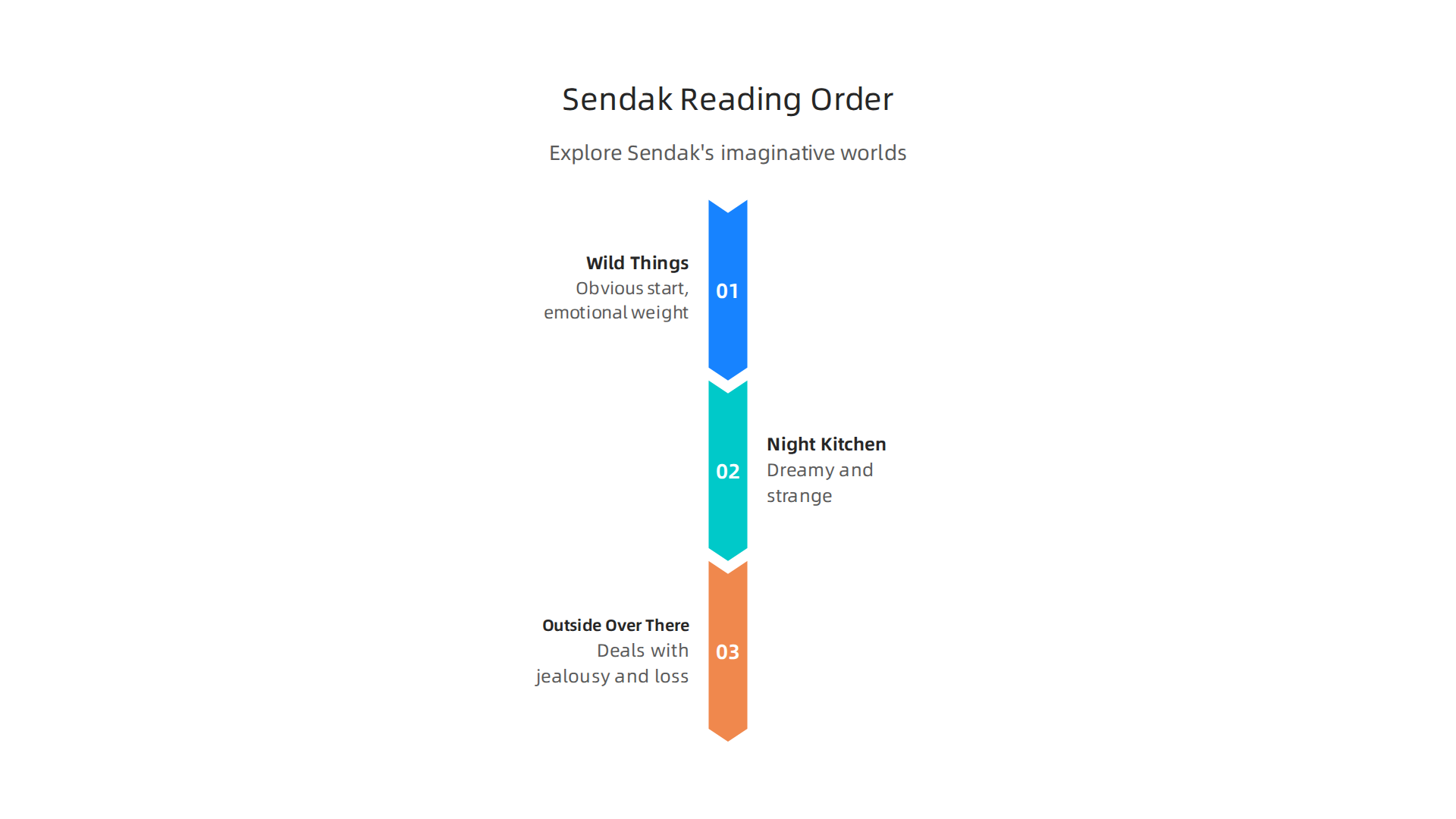
If you love fantasy for its emotional depth and vivid worlds, do not skip Sendak. Where the Wild Things Are is the obvious start. Then try In the Night Kitchen, which is dreamy and strange, or Outside Over There, which deals with jealousy and loss.
These are not just children’s books. They are tiny, perfect fantasy stories.
If you want more authors who blend deep emotion with imaginative worlds, check out our list of the 10 best fantasy fiction books of all time that defined the genre. It is a great next step.
And if you are in the mood for something completely different but still full of imagination, The Ridiculous offers imaginative worlds with a comic sci-fi twist. It is a fun way to keep that spark alive.
Common Themes: What These Authors Share with Fantasy
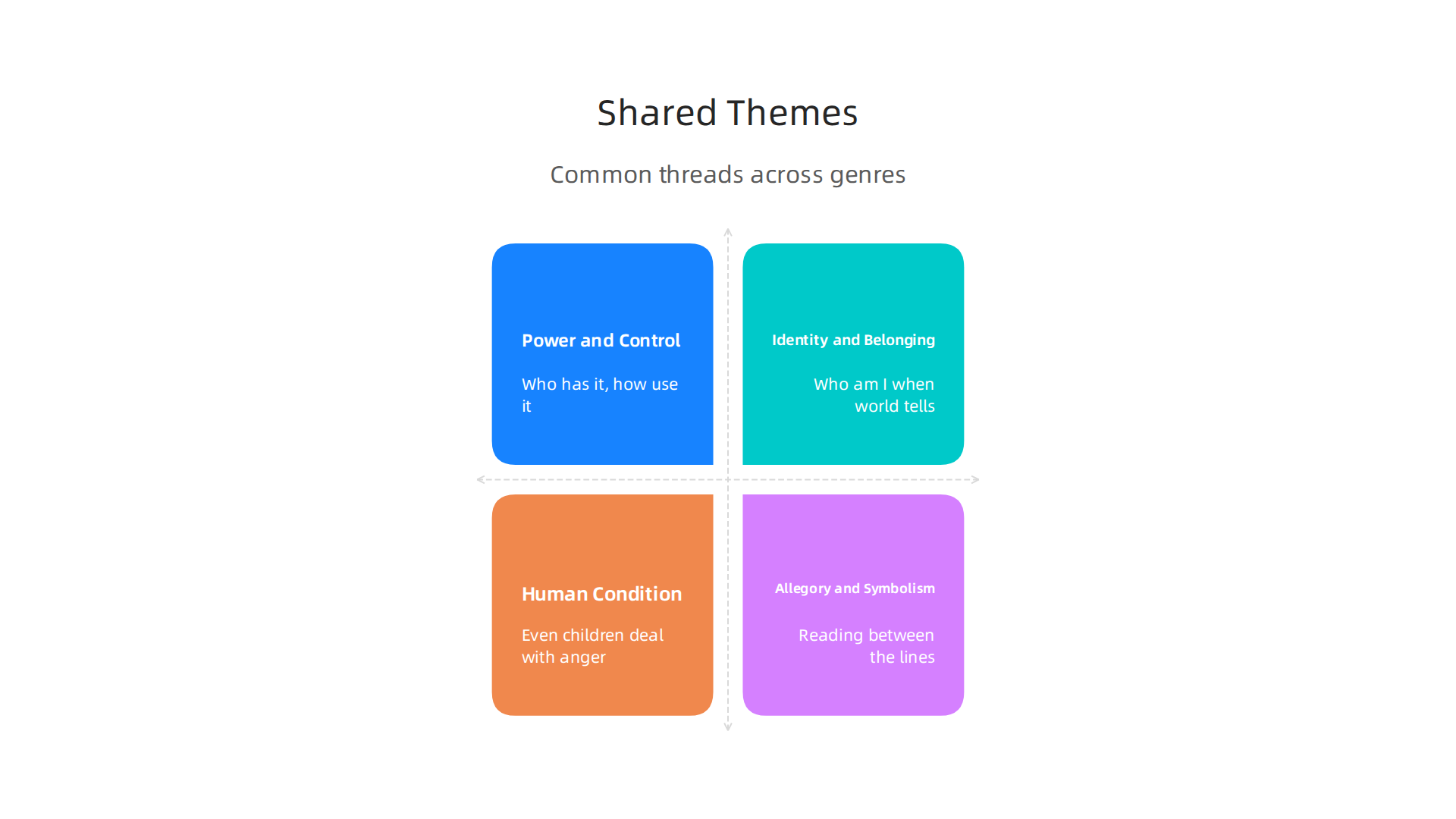
By now you have seen how Maurice Sendak, James Baldwin, and George Orwell each build worlds that feel both familiar and strange. They do not write dragons or wizards. But they share something deep with fantasy. All three explore power, identity, and what it means to be human. Those are the same questions that drive the best fantasy series.
Power and Control
George Orwell books like 1984 and Animal Farm are really about power. Who has it. How they use it. How they keep it. Orwell shows us a world where the government watches every move and twists the truth. That is pure dystopian fantasy. Many modern fantasy series, from The Hunger Games to The Handmaid’s Tale, borrow that same fear of total control. To understand the roots of this theme, it helps to read Orwell in order. A guide from Pan Macmillan explains that his work continues to shape how we think about power today (check the Pan Macmillan guide). Starting with Animal Farm is a great way in.
Identity and Belonging
James Baldwin books dig into identity harder than most fantasy novels do. He asks: Who am I when the world tells me I am less? His characters struggle with race, sexuality, and home. That same struggle appears in every fantasy coming-of-age story. Think of Frodo carrying the ring or Harry Potter facing his destiny. Baldwin shows that the inner battle is just as real as any monster. Princeton University recommends starting with The Fire Next Time to feel that power (see the Princeton guide). Fantasy readers who love character growth will find Baldwin incredibly satisfying.
The Human Condition
Maurice Sendak books remind us that even children deal with anger, fear, and jealousy. His wild things are not monsters. They are feelings. Every fantasy hero faces those same inner storms. Sendak uses pictures and words together to show the journey from chaos to peace. That is exactly what a fantasy quest does. The Wikipedia biography notes that his own childhood losses shaped this honest view of emotion (read the Wikipedia entry). For adult readers, his books are tiny mirrors.
Allegory and Symbolism
All three authors use allegory. Orwell turns farm animals into a warning about tyranny. Baldwin uses a gay love story to talk about identity and exile. Sendak uses a wild rumpus to talk about anger. Fantasy does the same thing all the time. A dark lord can represent fear. A magical ring can represent temptation. If you love reading between the lines, these authors will feel like home.
For a deeper dive into fantasy series that explore identity and power, check out our guide to Diverse fantasy series by women that will captivate you. It is full of worlds where these same themes shine.
And if you want something completely different but still full of imagination, The Ridiculous offers imaginative worlds with a comic sci-fi twist. It is a lighthearted way to keep exploring new ideas.
A Reading Path for Fantasy Fans: Orwell, Baldwin, and Sendak
You have seen how these three authors share the same heartbeat as fantasy. Now the question is: where do you start? The beauty of this trio is that each offers a different door into literary fiction. You can pick the one that matches your mood.
Start with George Orwell If You Love Dystopian Worlds
If your favorite fantasy series involves oppressive governments, hidden rebellions, or worlds where truth is twisted, go straight to Orwell. The best way in is simple. Begin with Animal Farm. It is short, direct, and reads like a fable. You will finish it in an afternoon. Then move to 1984. That is the deep dive. According to a complete guide from The New Canon, this reading order works best for newcomers (check the reading order guide). After those two, try his non-fiction like The Road to Wigan Pier. It gives you the man behind the stories.
Try James Baldwin If You Love Character-Driven Stories
Baldwin is for fantasy readers who love inner journeys. His books are not about magic spells. They are about real people fighting to be seen. Start with The Fire Next Time. It is a short book that blends memoir and essay. It hits like a punch. Then try Giovanni’s Room. That novel is a perfect example of first person novels done right. You are inside the narrator’s head the whole time. Princeton University suggests this as a great entry point (see the Princeton guide). If you want more, Another Country expands on the same themes of love and identity.
Read Maurice Sendak If You Love Visual Storytelling
Sendak is the easiest entry point. His picture books take ten minutes to read but stay with you for years. Start with Where the Wild Things Are. It is a perfect miniature fantasy quest. Max sails to an island of monsters and becomes their king. Then he comes home. That is the hero’s journey in forty sentences. Try In the Night Kitchen next. It is stranger and more surreal. His Wikipedia biography explains how his childhood losses shaped these stories (read more on Wikipedia). For fantasy fans who love worldbuilding in few words, Sendak is a masterclass.
Tips for Individuals and Book Clubs
If you are reading alone, pick one author and commit to two books. Do not jump around. Let the themes sink in. If you are in a book club, try a theme night. Read Animal Farm and Where the Wild Things Are together. Both are about power and rebellion in small packages. Then discuss how they use allegory differently.
For a deeper dive into fantasy series that explore complex worlds, check out our guide to the Burroughs novels reading order. It pairs well with these authors.
And if you want something completely different but still full of imagination, The Ridiculous offers imaginative worlds with a comic sci-fi twist. It is a lighthearted way to keep exploring new ideas after these heavier reads.
Summary
This article helps fantasy readers widen their reading list by introducing three literary authors—George Orwell, James Baldwin, and Maurice Sendak—whose work resonates with the skills and tastes fantasy fans already have. It explains why the clear prose, moral stakes, and worldbuilding instincts that draw readers to epic fantasy also make these writers rewarding next steps, and it highlights recommended entry points like Animal Farm, The Fire Next Time, and Where the Wild Things Are. You’ll get a breakdown of shared themes (power, identity, the human condition, and allegory), practical reading orders for each author, and tips for solo reading or book-club discussions. The piece shows how short, intense works and picture books can offer the same emotional depth as long fantasy sagas, and it gives a simple roadmap so you can start exploring confidently. By the end you’ll know which book to pick first and how to move between these authors for a richer, more varied reading life.